
The queen is the most powerful piece in chess, capable of moving in any direction—horizontally, vertically, or diagonally—across the board. However, due to its immense power, misusing the queen can lead to blunders, wasted moves, or even a quick loss. This guide will help you understand how to move the queen effectively, avoid common mistakes, and maximize its potential in all phases of the game.

1. Understanding the Queen’s Movement
Before learning advanced queen strategies, it’s crucial to understand how the queen moves and how to use it correctly.
✔ How the Queen Moves:
✅ The queen moves in three directions:
- Horizontally (along the same rank)
- Vertically (along the same file)
- Diagonally (like a bishop)
✅ The queen can capture any opponent’s piece along its path.
✅ The queen cannot jump over other pieces (unlike the knight).
✅ If an obstacle is in its way, the queen can move only up to the nearest available square before the obstruction.
💡 Important Notes:
⚠ The queen should not be moved too early, or your opponent may develop their pieces while attacking it.
⚠ Placing the queen in a vulnerable position can lead to immediate loss or a positional disadvantage.
2. Common Mistakes When Using the Queen
❌ Mistake #1: Bringing the Queen Out Too Early
🚨 Why it’s a mistake:
- Many beginners move their queen out in the first few moves, thinking it can dominate the game early. However, experienced opponents will attack the queen, forcing it to retreat multiple times, wasting moves.
- Developing your knights and bishops first creates a stronger position before moving the queen.
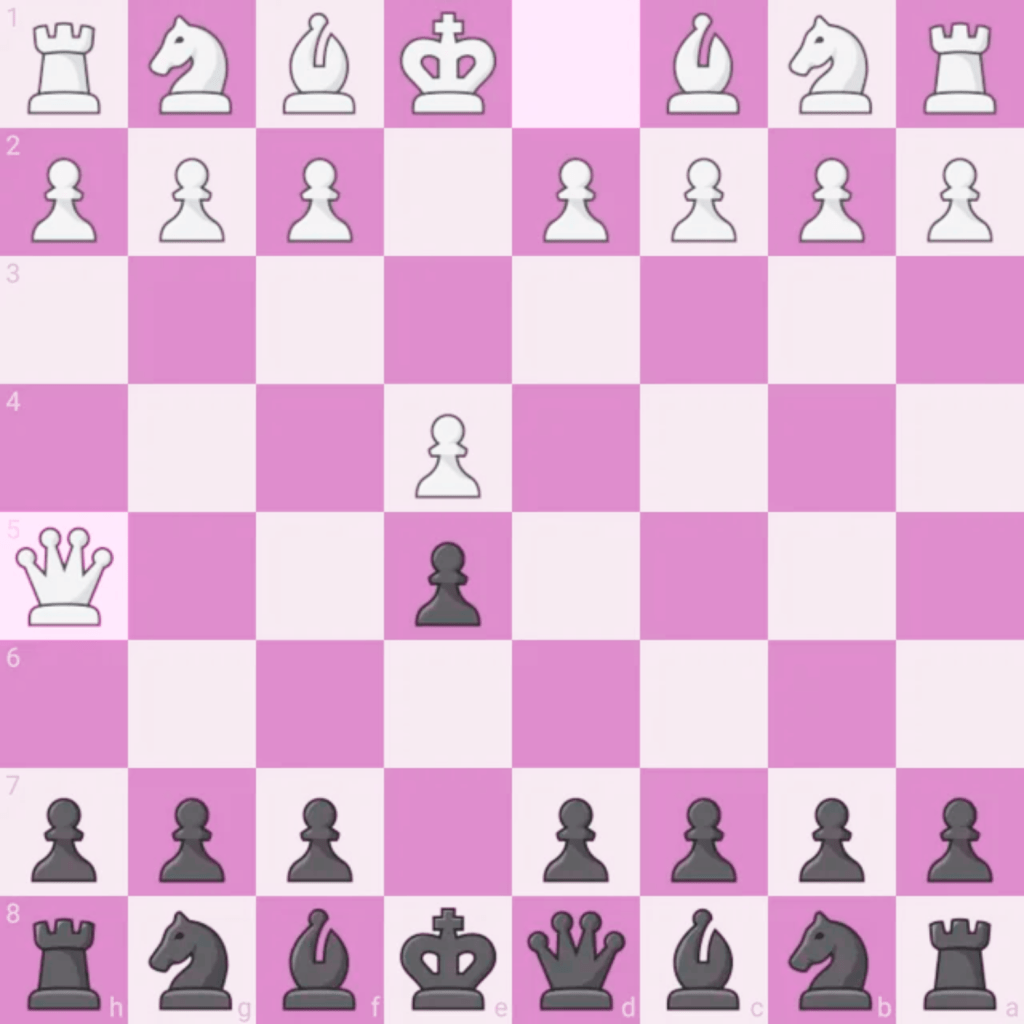
🔹 Example of a bad move:
1. e4 e5
2. Qh5? (bad move – Queen comes out too early)
2… Nc6! (attacks the Queen, forcing it to move again)
✅ Correct approach:
- Develop knights and bishops first.
- Castle early to protect your king.
- Only bring the queen out after other pieces are developed, typically after move 10.
❌ Mistake #2: Placing the Queen in a Dangerous Position
🚨 Why it’s a mistake:
- Placing the queen where it can be easily attacked by minor pieces (like knights or pawns) forces unnecessary queen moves.
- If you move the queen in front of your king, your opponent might trap it or gain tempo by attacking it.
🔹 Common blunder:
1. e4 e5
2. Qf3? (bad move – the Queen is exposed)
2… Nc6 (attacks the center while preparing to develop more pieces)
✅ Correct approach:
- Before moving the queen, always check if your opponent can attack it immediately.
- Avoid placing the queen in a square where knights can fork it.
❌ Mistake #3: Relying Only on the Queen to Attack
🚨 Why it’s a mistake:
- Many beginners try to attack only with the queen, which is predictable and easy to defend against.
- Experienced players will chase your queen away while developing their own pieces.
✅ Correct approach:
- Use knights, bishops, and rooks along with the queen to coordinate attacks.
- The queen should be used as a supporting piece, not the sole attacker.
3. When Should You Develop the Queen?
🔹 The golden rule: The queen should not be developed too early unless there is a tactical opportunity.
✅ Safe example of developing the queen correctly:
1. e4 e5
2. Nf3 Nc6
3. Bc4 Bc5
4. d3 d6
5. Be3 Bg4
6. h3 Bxf3
7. Qxf3 (now the queen is safely developed and supports the position)
🔹 In this example:
- The queen develops naturally without being an immediate target.
- The queen replaces a captured piece, making its move more efficient.
4. How to Use the Queen Effectively
✅ (1) Using the Queen to Attack
- The queen is excellent for creating threats such as check, capturing weak pieces, or forcing defensive moves.
- Best attacking strategies with the queen:
✔ Double attacks (forks): The queen attacks two pieces at once.
✔ Pinning: The queen can pin a rook or bishop against the king.
✔ Back-rank threats: If the opponent’s king has no escape squares, the queen can deliver checkmate.
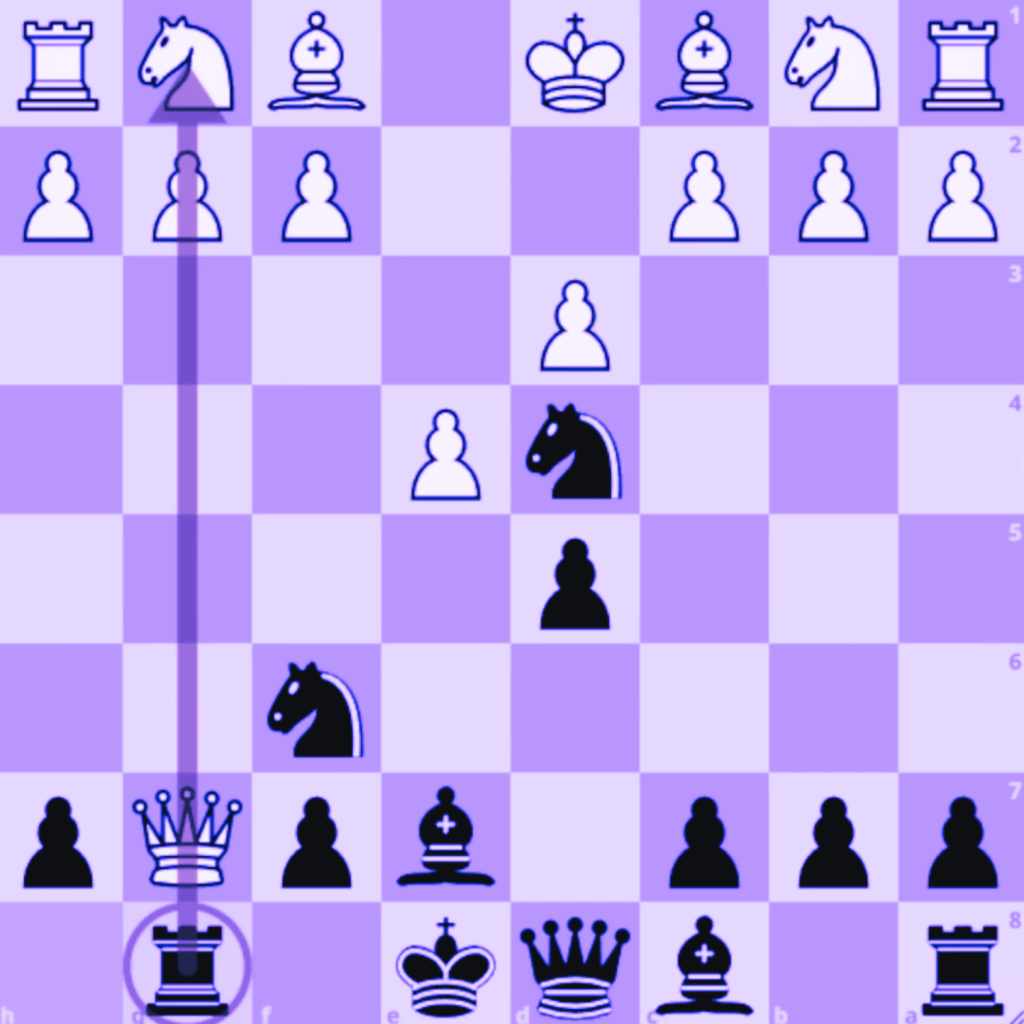
🔹 Example of a queen fork:
- White’s move: Qe5! (attacks both a rook and a bishop, winning material).
✅ (2) Using the Queen for Defense
- The queen should not only attack but also support your other pieces.
- Placing the queen in a strong position allows it to defend and control the board.
✔ Example: If White plays Qd1, it protects the rook on d1 from an opponent’s attack.
✅ (3) Using the Queen in the Endgame
- In the endgame, the queen is extremely powerful in creating mating nets and controlling the board.
- If you have a queen vs. a lone king, you can checkmate by:
✔ Controlling key squares to trap the king.
✔ Using the queen and king together to force checkmate.
🔹 Basic checkmate with a queen:
- Use the queen to push the enemy king toward the edge of the board.
- Use the king to restrict the opponent’s movement.
- Deliver checkmate when the king is in a corner.

5. How to Practice Using the Queen
To master queen movement, follow these training exercises:
✔ (1) Play 10 games where you don’t move the queen before move 10.
✔ (2) Practice checkmating with a queen + king vs. king.
✔ (3) Solve tactical puzzles that involve queen forks, pins, and checkmates.
✔ (4) Watch grandmaster games and observe how they develop the queen.
Conclusion: Mastering the Queen in Chess
The queen is an exceptionally powerful piece, but using it incorrectly can lead to disaster. By following these principles, you can use the queen effectively while avoiding common pitfalls:
✔ Develop minor pieces first before moving the queen.
✔ Don’t bring the queen out too early unless necessary.
✔ Use the queen in combination with other pieces for a strong attack.
✔ Keep the queen safe while using it for both attack and defense.
By practicing good queen strategy, you will improve your chess skills, avoid blunders, and dominate your opponents with precise and calculated queen maneuvers. ♟🔥
 Just Golden Queen
Leave a comment